Signs it's time to step in
Last reviewed: 17 July 2026
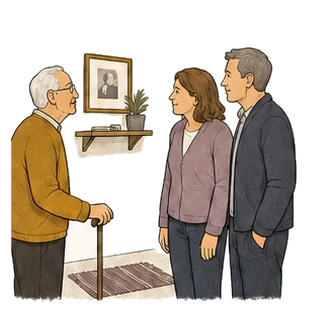
Maybe it was something small. A missed birthday. The house not quite as tidy as it used to be. A phone call where your mother or your uncle seemed a step behind the conversation. On its own, none of it means much. But if you're reading this, something has nagged at you enough to search for it.
This page won't tell you what's wrong with your relative — that's not something a website can do, and it's not something you should try to diagnose yourself either. What it can do is help you notice patterns, so you can decide whether it's time to ask more questions, involve someone else in the family, or get a professional to take a look.
You're often not the person who sees them every day. That's normal, and it doesn't make your concern less valid — a step back can sometimes make changes more visible, not less.
Signs around the home and daily safety
- Unopened post piling up, or bills that seem to have been forgotten
- Food in the fridge that's gone off, or very little fresh food at all
- The house colder than it used to be, even in winter
- New dents or scrapes on the car, or a car that's stopped being used
- Clutter, unwashed dishes, or general untidiness that's out of character
- Signs of a fall — bruising, a cracked ornament, furniture moved to lean on
- Smoke alarms with dead batteries, or a burnt pot left on the cooker
Signs around health and medication
- Weight loss, or clothes that suddenly look too big
- Medication boxes that look untouched, or several days' worth still in the blister pack
- Repeating the same story or question within a short conversation
- Missing GP or hospital appointments they'd normally keep
- Struggling with tasks that involve several steps in order, like cooking a meal
- New unsteadiness on their feet, or avoiding the stairs
None of these observations are a diagnosis, and this page isn't making one. Changes like these can have many causes — some temporary, some medical, some just part of getting older. A GP is the right person to assess what's actually going on.
Signs around social and emotional wellbeing
- Withdrawing from clubs, mass, or friends they used to see regularly
- Flat mood, or a loss of interest in things they used to enjoy
- Irritability or suspicion that feels out of character
- Talking about feeling lonely, or long stretches with no one to talk to
- Reluctance to answer the phone or door
Signs around money and paperwork
- Unusual purchases, or repeated payments to the same unfamiliar company
- Unpaid bills alongside money that should be there to cover them
- Confusion about what's been paid and what hasn't
- New "friends" or callers taking an unusual interest in their finances
- No enduring power of attorney in place, despite other signs above
What to do next
You don't need certainty before you act — you just need a next step that isn't "wait and see."
- Talk to your relative first, if you can. A direct, gentle conversation is usually better than raising it behind their back.
- Loop in whoever else is close by. A sibling, neighbour, or friend who sees them more often may have already noticed things you haven't.
- Bring it to their GP. A GP can properly assess health and cognitive changes — this is not something to work out from a distance.
- If you're not sure who else to involve, our who do I callpage walks through the different services and numbers depending on the situation.
- If you want a fuller picture of the supports available, seewhere to get help.
- If you're worried and just want to talk it through, Family Carers Ireland runs a National Freephone Careline staffed by people experienced in exactly this situation — see their Help & Guidance page. For general information on health and social care services, HSE.ieis the starting point, and Citizens Informationcovers entitlements and where to turn for a needs assessment.
If you ever believe your relative is in immediate danger — a fall they can't get up from, a fire risk, a medical emergency — call 999 or 112 straight away.
Get the free Something has changed checklist
Download the PDF or open a version you can print. You can also subscribe for a link to the full library and occasional guidance.
Recognising these signs is the first step, not the last. It's normal to feel unsure, or guilty that you didn't notice sooner — most secondary carers say the same thing. What matters now is what you do next, and you don't have to work it out alone.